The connection to the dead is maintained.
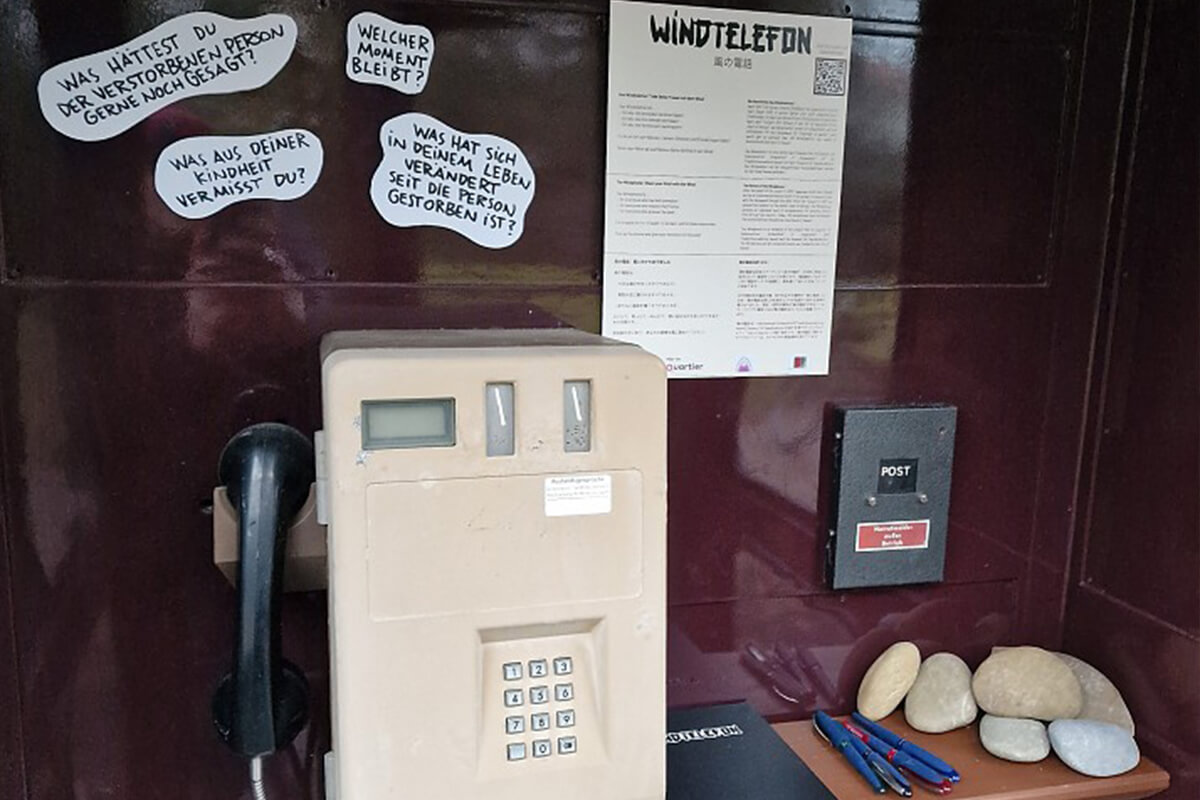
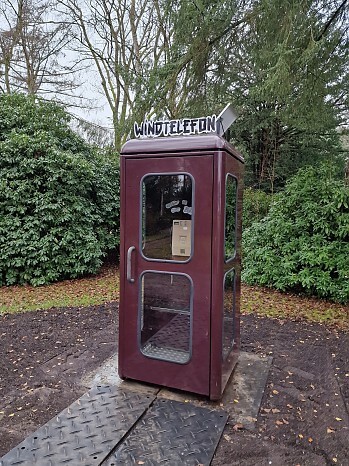
The Museum of Sepulchral Culture presented its "Wind Telephone" as part of its "Consolation" exhibition: Japanese artist Itaru Sasaki's wind telephone, made from a telephone booth, which he placed in his garden in 2010 to communicate with his deceased cousin through the wind. A wind telephone has also been installed in Kassel's main cemetery. Those who have lost a loved one can use it to try and connect with them.
The Wind Telephone is a collaborative project between Kulturzentrum Schlachthof gGmbH, the Museum für Sepulkralkultur, and the Kassel Cemetery Administration. Eckehart Göritz, head of the Kassel Cemetery Administration, explains: “You are speechless, breathless, powerless when you lose a loved one. You go through different phases of grief. Who is there for you when someone you were deeply connected to has passed away?” Besides communicating with relatives, it can be helpful to connect with the deceased in spirit. “The Wind Telephone is a helpful tool for this,” says Göritz. You can contact your relatives at any time and find comfort through interaction with the spirit of the deceased. “We don’t have an observation tower or a lake at Kassel’s main cemetery – but we do have a Wind Telephone. And I’m thrilled about it.” Ultimately, the idea behind the Wind Telephone underscores once again how important it is to find a place for grief.
Helping people, especially in crisis situations, and providing them with support is the intercultural approach of the Schlachthof Cultural Center. "Those who come to Kassel from the war encounter a different culture and often lack stability," says Schlachthof Managing Director Mirko Zapp. To respond to feelings such as anger, grief, and also feelings of powerlessness, the cultural center pursues a participatory approach. With the Wind Telephone, they have now taken on a new challenge: death and grief – themes that are central to the Museum for Sepulchral Culture. "With our exhibitions, we also offer suggestions on how to cope with experiences of loss. Sasaki's Wind Telephone, for example, was featured in our last special exhibition, 'Comfort – Tracing a Human Need,'" says Gerold Eppler, Deputy Director of the Museum for Sepulchral Culture and museum educator. "That's what our work is about: We want to offer people something." Unlike exhibitions that disappear, the Wind Telephone is here to stay. Permanently installed in the main cemetery, it also provides an impetus to reflect on what the cemetery means.
There, at the Museum for Sepulchral Culture, Daniel Krooß and Gerrit Retterath from the neighborhood project "Hier im Quartier" (Here in the Neighborhood) stumbled upon the idea of the Wind Telephone. "We are convinced that this telephone booth is a very good approach to addressing this complex topic," says Krooß. Their central aim is to combine art with neighborly encounters. "The Wind Telephone is easily accessible: You can simply go in and be alone. The accompanying art workshops then offer the opportunity to connect with others," adds Retterath. The program begins with three workshops in which stones are painted. They are led by the artist Aliaa Aboukhaddour. "Loss becomes more bearable when you can express yourself. For example, through art. You can say anything with art," says Aboukhaddour. And it reveals much of what lies within you.
Visibility is something that also benefits the topic of death: The wind telephone would counteract the trend of hiding death and having everything "taken care of quickly" by a funeral director, as Eckehart Göritz puts it, instead of laying out the deceased. "Emotional processes continue." The wind telephone offers the possibility of staying in contact with loved ones long after death.
Around the burgundy-colored telephone booth, located near the cemetery entrance, there will be a year-round program of events. The neighborhood can participate in shaping the "Wind Telephone" project and contribute and express their concerns and perspectives on death, grief, and loss. The Wind Telephone offers various methodological approaches. Following a workshop on creating memorial stones with Aliaa Aboukhaddour, for example, a writing workshop with poet Leticia Wahl is planned. The workshops with Aboukhaddour take place every last Saturday of the month, starting at noon.
This is the project "Here in the neighborhood"
Since 2018, the socio-cultural project "Hier im Quartier" (Here in the Neighborhood) in northern Kassel has been creating participatory art projects that offer opportunities for creative self-expression. With free programs, the project aims to bring people together and use art as a tool for collaboratively shaping their own neighborhood environment. Following four years of federal funding, "Hier im Quartier" has been supported by the Kassel Cultural Office since 2023.