
Charter on Cemetery Culture signed
A strong, united statement in support of cemeteries
Kassel. The most important institutions and associations in the German cemetery sector have sent a clear signal for the preservation and further development of cemeteries: On Thursday, they jointly signed the "Charter for Cemetery Culture." The manifesto articulates the value of cemetery culture for people and our society. The charter also defines a common understanding of terms for public discourse on cemetery culture and highlights the great diversity of this cultural asset.
“Every person has the right to a dignified burial in a cemetery and to respectful remembrance,” reads the first of the eleven guiding principles of the Charter, which outlines all relevant aspects of cemetery culture in easily understandable terms. It addresses not only the deeply human questions surrounding mourning and remembrance, but also emphasizes the cultural, social, historical, and integrative aspects of cemetery culture. Among other things, it underscores the ecological value of cemeteries and the reminder of peace and international understanding that emanates from graves and memorials to the victims of war.
In March of last year, cemetery culture in Germany was included in the nationwide register of intangible cultural heritage. The charter therefore emphasizes the societal importance of this cultural asset in its final sentence: "Preserving cemetery culture in Germany as intangible cultural heritage in accordance with UNESCO, adapting it to people's needs and developing it further, is a responsibility of society as a whole."
The charter, signed on Thursday at the Museum for Sepulchral Culture in Kassel, was the result of over a year of work by the participating associations and institutions, with scientific support, on its wording and the implementation of the charter through intensive coordination processes. Participating organizations included: the Working Group on Cemeteries and Monuments, the Association of German Cemetery Gardeners, the Federal Association of German Funeral Directors, the Federal Association of German Stonemasons, the Board of Trustees for Intangible Heritage of Cemetery Culture, the German Funeral Culture Foundation, the Association of Cemetery Administrators of Germany, the Association for the Promotion of German Cemetery Culture, and the German War Graves Commission.
A key objective of the Charter for Cemetery Culture is to collectively emphasize the value of cemeteries for people and our society. Therefore, all stakeholders in the cemetery sector and supporting institutions, as well as all cities and municipalities as responsible custodians of this cultural asset, are now called upon to join the Charter for Cemetery Culture. Further information, including details on how to join, can be found at www.charta-friedhofskultur.de.
Your press contact on behalf of the CHARTA Cemetery Culture initiative:
Board of Trustees for Intangible Heritage of Cemetery Culture, Tobias Pehle
presse@kulturerbe-friedhof.de , Tel.: 0171 7039925
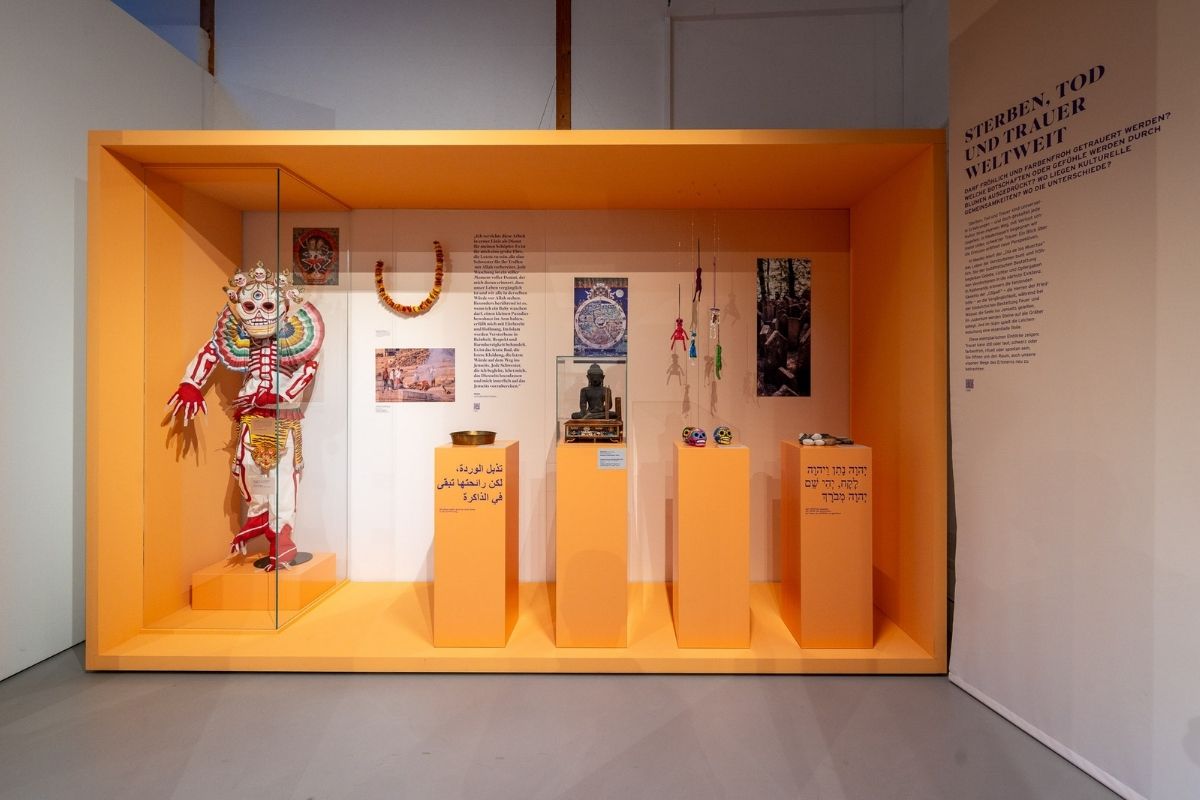
The Museum of Sepulchral Culture has existed as a cultural institution of national importance since 1992. As the world's only institution dedicated exclusively to cultural and scientific standards, it addresses death in all its facets. The term "sepulchral culture" derives from the Latin "sepulcrum," meaning grave or burial site. The term encompasses all forms that have developed in connection with dying, death, burial, mourning, and remembrance: burial and mourning rites and customs, but also artistic perspectives on dying and death. For the past two decades, dying, burial, mourning, and remembrance have been subject to significant changes in practice and public perception. The museum offers unique opportunities to research, contextualize, and communicate these processes.
The Charter
- Every person has the right to a dignified burial in a cemetery and to be honored in remembrance.
- Cemetery culture in Germany is an indispensable part of our social life.
- Our established mourning rituals – with burial in the cemetery as the central framework – ensure a dignified farewell in a timely manner and help people to process death and grief.
- As places of encounter and shared remembrance, cemeteries are irreplaceable social spaces that are accessible to everyone.
- Cemeteries are identity-forming cultural spaces in our pluralistic society with great unifying power.
- Cemeteries offer people valuable space to live and shape their faith.
- As green spaces, cemeteries actively contribute to climate and nature conservation and are places of biodiversity.
- Designing graves as small gardens of remembrance with a memorial stone is a unique cultural form that expresses appreciation for the deceased and supports mourning through active engagement.
- As self-writing history books, cemeteries are of high historical significance and must be maintained in accordance with their status as monuments.
- Graves and monuments for the victims of war and tyranny are cornerstones of the culture of remembrance, serving as a reminder of the need for peace and contributing to understanding between nations and cultures.
- Preserving cemetery culture in Germany as intangible cultural heritage in the sense of UNESCO, adapting it to the needs of the people and developing it further, is a responsibility of society as a whole.
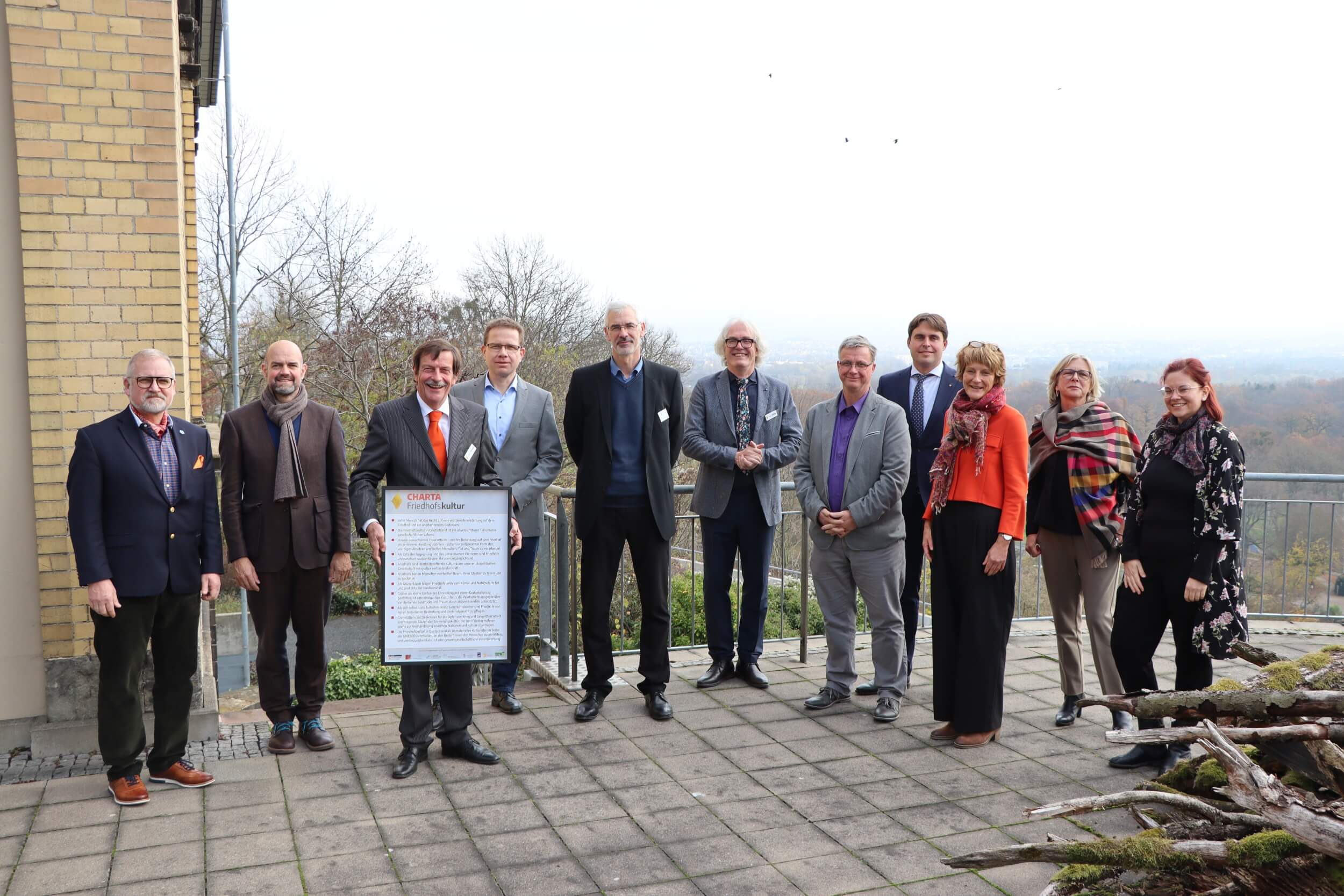
The undersigned