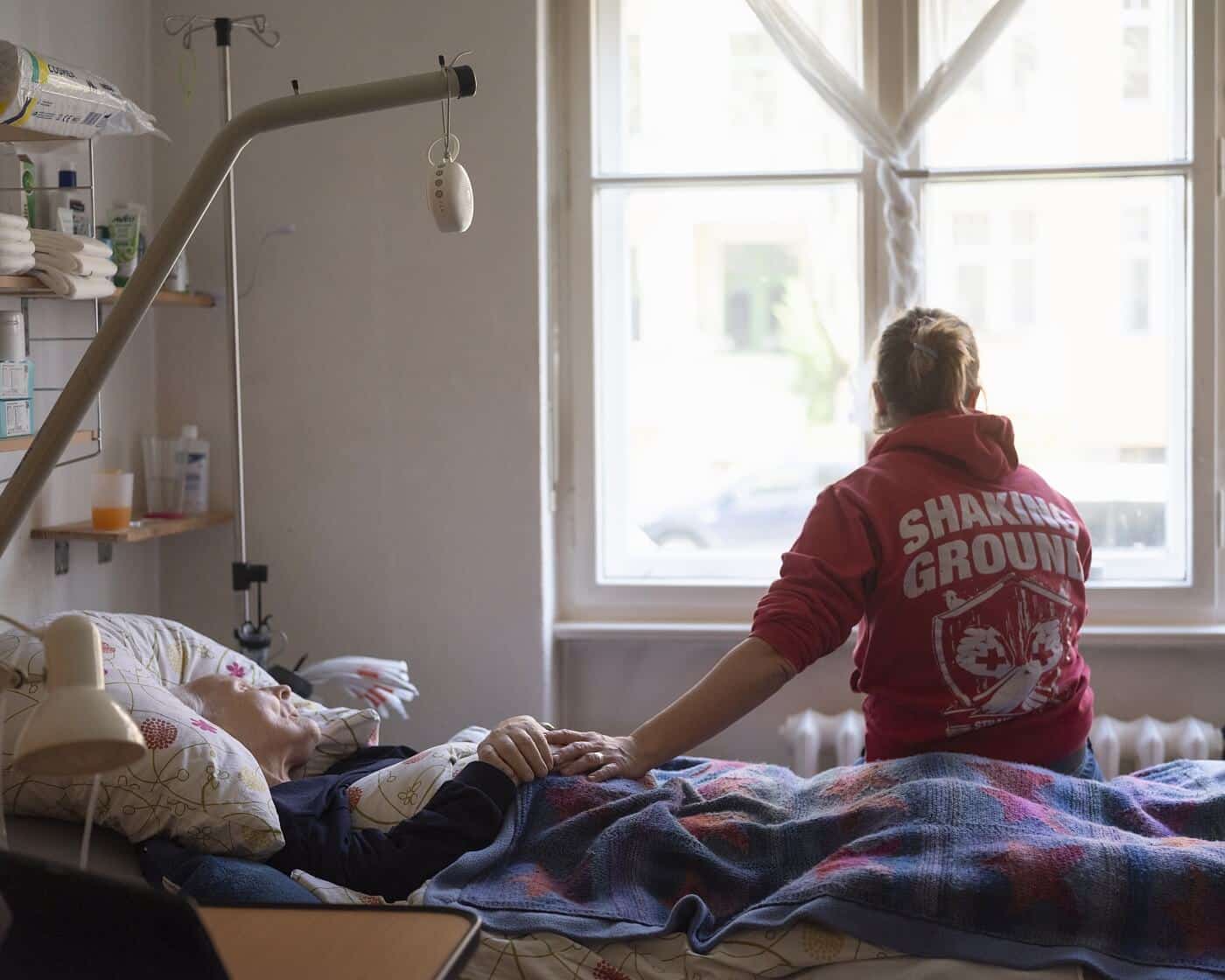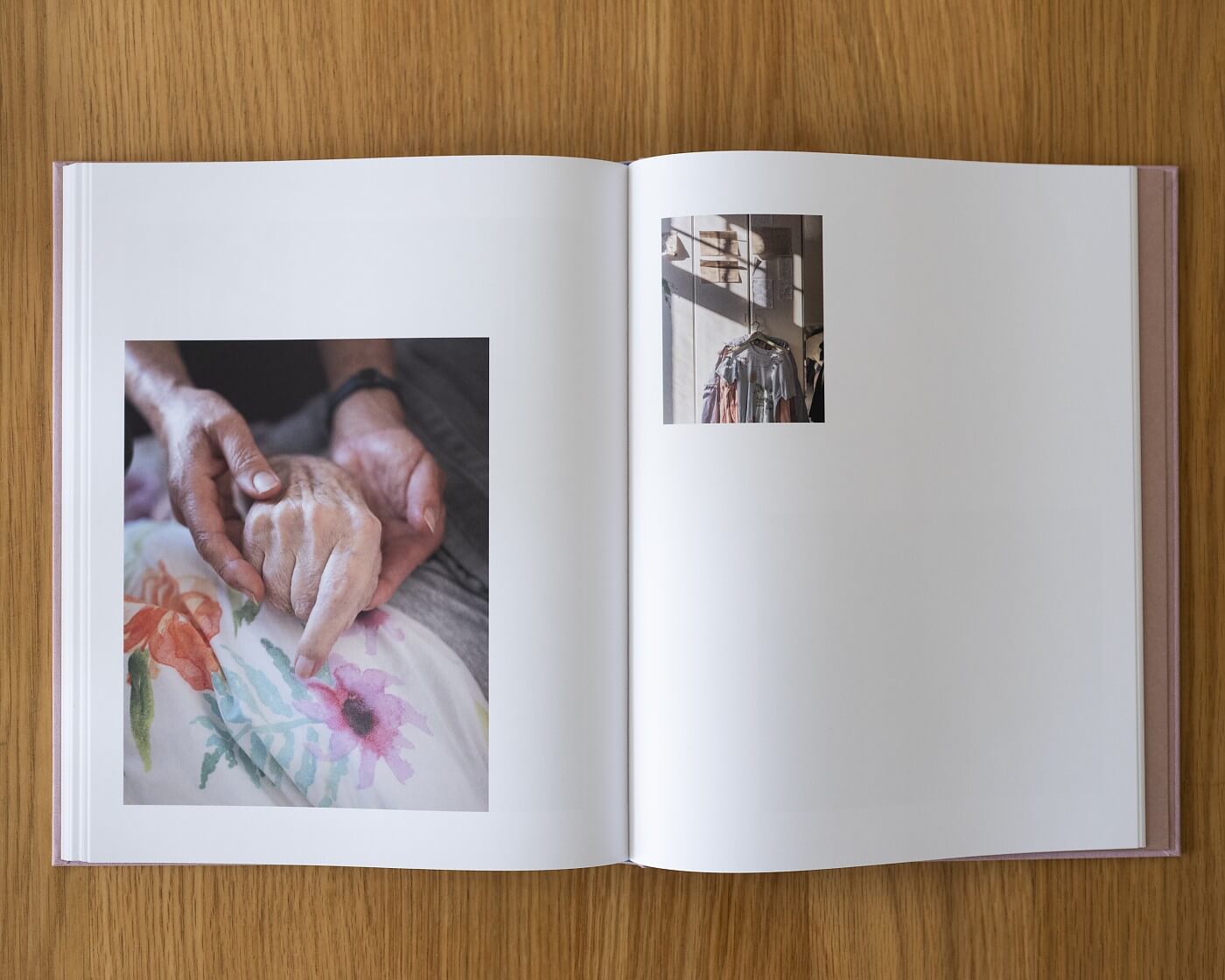

Within the exhibition, photographer Sibylle Fendt presents 4.0 photographs, created by accompanying dying people in their homes. A guided tour of the exhibition, " Before the Time Comes," will be followed by a discussion with palliative care physician Dr. Thomas Schindler, relatives of people who wished to die at home, and museum director Dr. Dirk Pörschmann.
Entry and participation are free, donations are welcome.
Sibylle Fendt: Before it gets to that point
Kehrer, 140 pages, 48 euros
Sibylle Fendt – Before it comes to that
He got up again because he had forgotten to open the skylight so that later the soul could fly out without any problems.
(Mariana Leky – What you can see from here)
My work, titled "Before It Happens," focuses on people who will die at home in the foreseeable future, or who are considered to have exhausted all treatment options. I accompanied them and their relatives/friends during their final days (sometimes weeks and months). In 2024, my husband passed away at home surrounded by his family after a long illness. After years of an odyssey of hospital visits, therapies, and treatment discontinuations, we reached the point where we realized the end was near. The moment we decided to stay at home brought a certain sense of relief, even though we suspected what lay ahead. This allowed my children and me to be with him during this final phase of his life. We were able to witness his passing and still had the support of our beloved home, which he also had. I was with him when he died, and we were able to say goodbye in an environment where, despite our indescribable grief, we felt safe and secure. In recent months, I have visited people in a similar situation. They have stayed home or returned home. They have come home. To find peace, to breathe one last time. Home is the place where they can be closer to their loved ones than anywhere else. The place where they are the director, not a guest. Their home has become the place where they sigh one last time, laugh one last time, hold the hand of their companion one last time, and then—they hope—pass gently into death.
Dying is a (taboo) topic that every single one of us has to confront at some point. Where and how do I want to die? And in the role of a relative, we may even have to deal with such a situation more than once. One's own home plays a significant role for the elderly or dying. Can they still remain at home? Who will care for them? The homes I visited carry a long history within them. Many people had lived there for decades. Home, which usually has a very positive connotation, associated with concepts like homeland, security, familiarity, and much more, can have the same positive aura in the moment of saying goodbye. That's what my work is about: making this support, this sense of home, tangible despite the farewell and the pain. During my visits, I experienced countless special moments because everything was so existential and intense. I was surprised by how clear-headed and prepared some people were in facing their impending death. But I also felt the sorrow and despair over their fate. I sensed a tenderness in people who seemed so hardened and unapproachable, and they said such clever and wise things. I was able to ask questions I could never ask my husband. I experienced so much incredible gratitude for my work, and I am so grateful to these people for letting me share in it. No two paths are alike. No one is without fear.
Sibylle Fendt was born in Karlsruhe in 1974. After completing a degree in photography at Bielefeld University of Applied Sciences, she moved to Berlin in 2002, where she still lives. Her graduation project, "Uneins" (Disagreement), won numerous national and international awards. In 2003, she participated in the World Press Photo Masterclass.